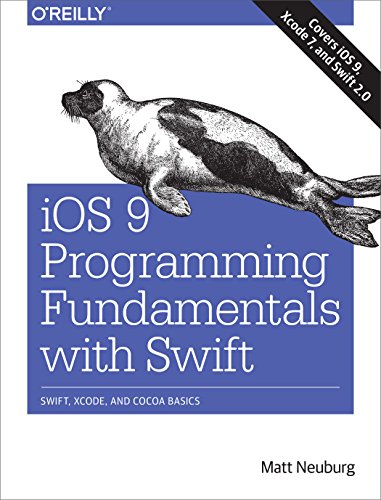
iOS 9 Programming Fundamentals with Swift: Swift, Xcode, and Cocoa Basics
This post contains affiliate links. As an Amazon Associate I earn from qualifying purchases Move into iOS 9 development by getting a firm grasp of its fundamentals, including Xcode 7, the Cocoa Touch framework, and Apple’s Swift programming language. With this thoroughly updated guide, you’ll learn Swift’s object-oriented concepts, understand how to use Apple’s development
This post contains affiliate links. As an Amazon Associate I earn from qualifying purchases
Move into iOS 9 development by getting a firm grasp of its fundamentals, including Xcode 7, the Cocoa Touch framework, and Apple’s Swift programming language. With this thoroughly updated guide, you’ll learn Swift’s object-oriented concepts, understand how to use Apple’s development tools, and discover how Cocoa provides the underlying functionality iOS apps need to have.
Explore Swift’s object-oriented concepts: variables and functions, scopes and namespaces, object types and instancesBecome familiar with built-in Swift types such as numbers, strings, ranges, tuples, Optionals, arrays, and dictionariesLearn how to declare, instantiate, and customize Swift object types—enums, structs, and classesDiscover powerful Swift features such as protocols and genericsTour the lifecycle of an Xcode project from inception to App StoreCreate app interfaces with nibs and the nib editor, Interface BuilderUnderstand Cocoa’s event-driven model and its major design patterns and featuresFind out how Swift communicates with Cocoa’s C and Objective-C APIs
This post contains affiliate links. As an Amazon Associate I earn from qualifying purchases